

Beyond the HBCU
Exploring the powerful ripple effect of historically Black colleges and universities on grassroots community dance teams. From legendary collegiate halftime lines to neighborhood studios, see how HBCU traditions sparked a vibrant, nationwide majorette movement.
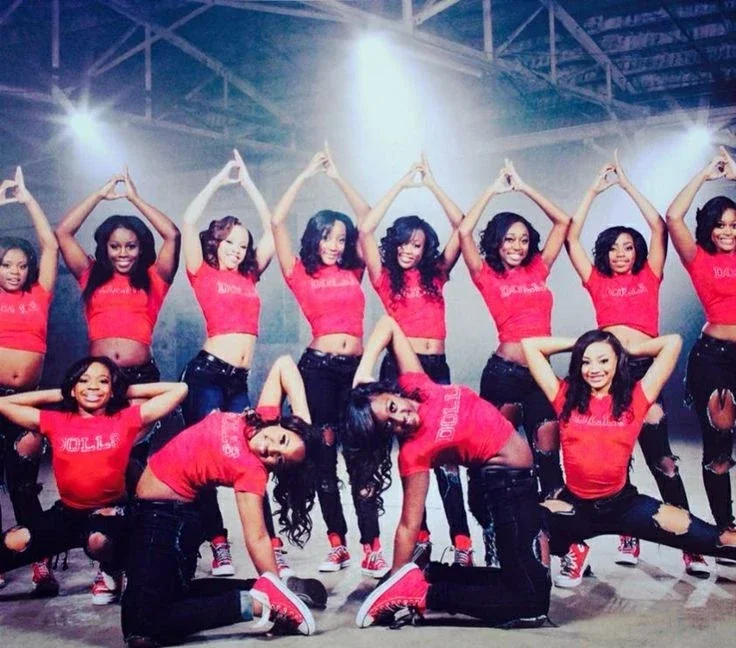
Majorette dance did not just stay on college campuses. Jackson State University’s Prancing J-Settes created a style of dance known as “J-Setting”, which began in 1971z Good Morning America examples that J-Setting is ““imitated all over the world’ and is know for its energy, cohesive dancing, acrobatics, and field shows (Strahan). The influence reached community dance through Dianna William’s, also known as “Miss D”. She transferred to Jackson State and tried out for the J-Settes but did not make the team. She later created her famous team ““The Dancing Dolls” in 2001. Williams explained she ““learned from watching the J-Settes at football games”. She watched them march, stomp, dance, buck, and swing. She wanted her own dancers to have that same presence. (Marable).
The Dancing Dolls became part of the hip-hop majorette competition scene. They compete in parades, showcases, and stand battles against other teams (Malone 1.)
Their story reached an even larger audience through their well-known show “Bring It!” which documents daily practices, prep for competitions, etc. The Dancing Dolls show how HBCU dance traditions could influence community majorette beyond a college setting. Majorette continues to evolve while keeping it’s same movement.
Bring It! episode showcasing The Dancing Dolls and their opponent teams’ rehearsal and preparation for their upcoming competition.
Define Dance Studio of Baton Rouge
Here’s a clip of me with my former dance team, Define Dance Studio, competing in an HBCU-style stand battle routine. I’m leading the routine at the front, and like many community teams, we brought HBCU inspired choreography, energy, and competitive spirit to the floor. Even the music you're hearing was a recording from an HBCU band.